Every defect detected. Every process anomaly mapped. Total efficiency. Mhira3D — 3D and thermal vision system for automatic quality control in die casting foundry
Mhira3D inspects the die-cast part in the robot gripper — three-dimensional integrity and process thermal monitoring — automatically and instantly. Adaptable to cells and parts of any size. The perfect solution for the foundry that does not impact cycle time.
Mhira3D analyses every casting in less than 500 milliseconds, inspects 100% of produced parts, combines 3D and thermal analysis in a single pass, handles parts of any size, and allows recipe changeover in 2 seconds.
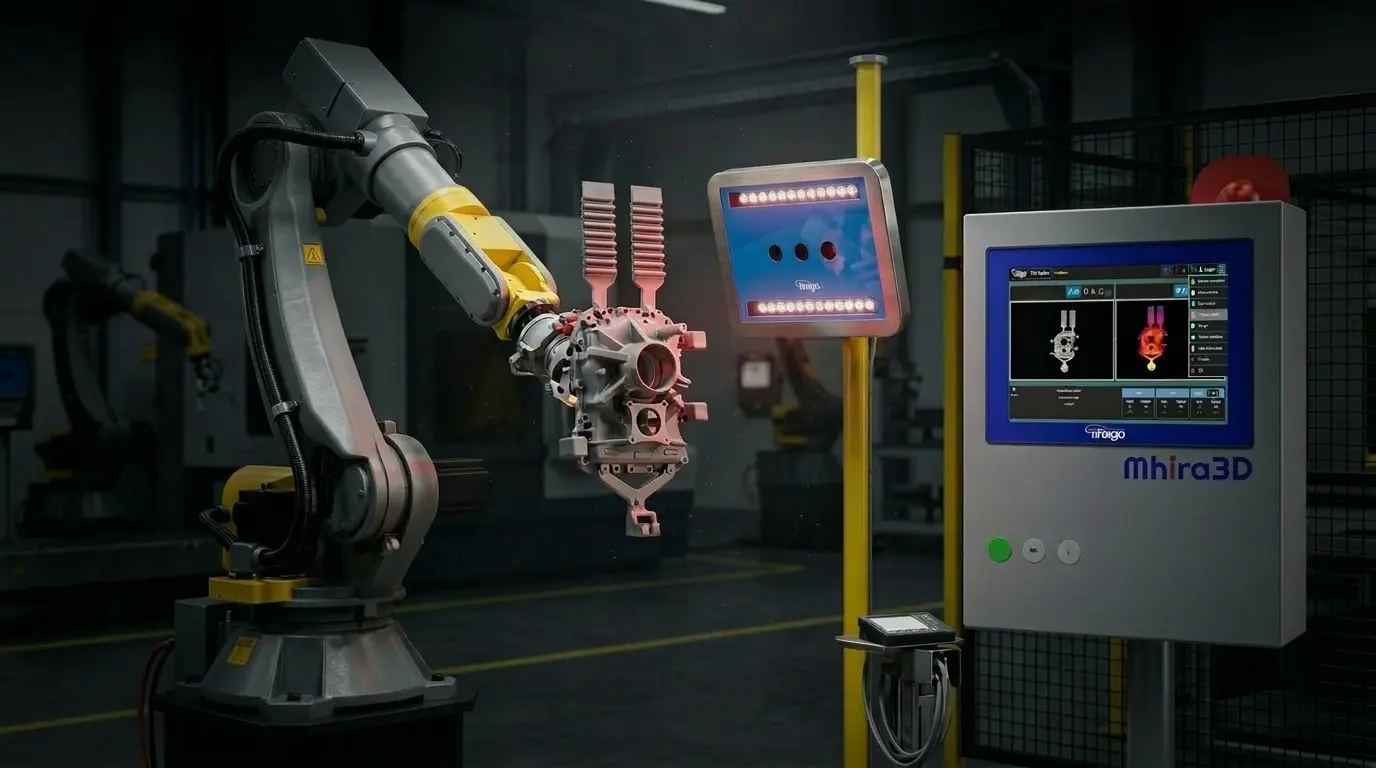
Post-press quality control with 3D and thermal inspection
Mhira3D is an automatic inspection system developed by Imago Srl that combines 3D vision and infrared thermography for quality control of die-cast parts as they exit the press. It analyses every casting in less than 500 ms, directly in the robot gripper, detecting geometric defects and thermal process anomalies in a single automatic pass.
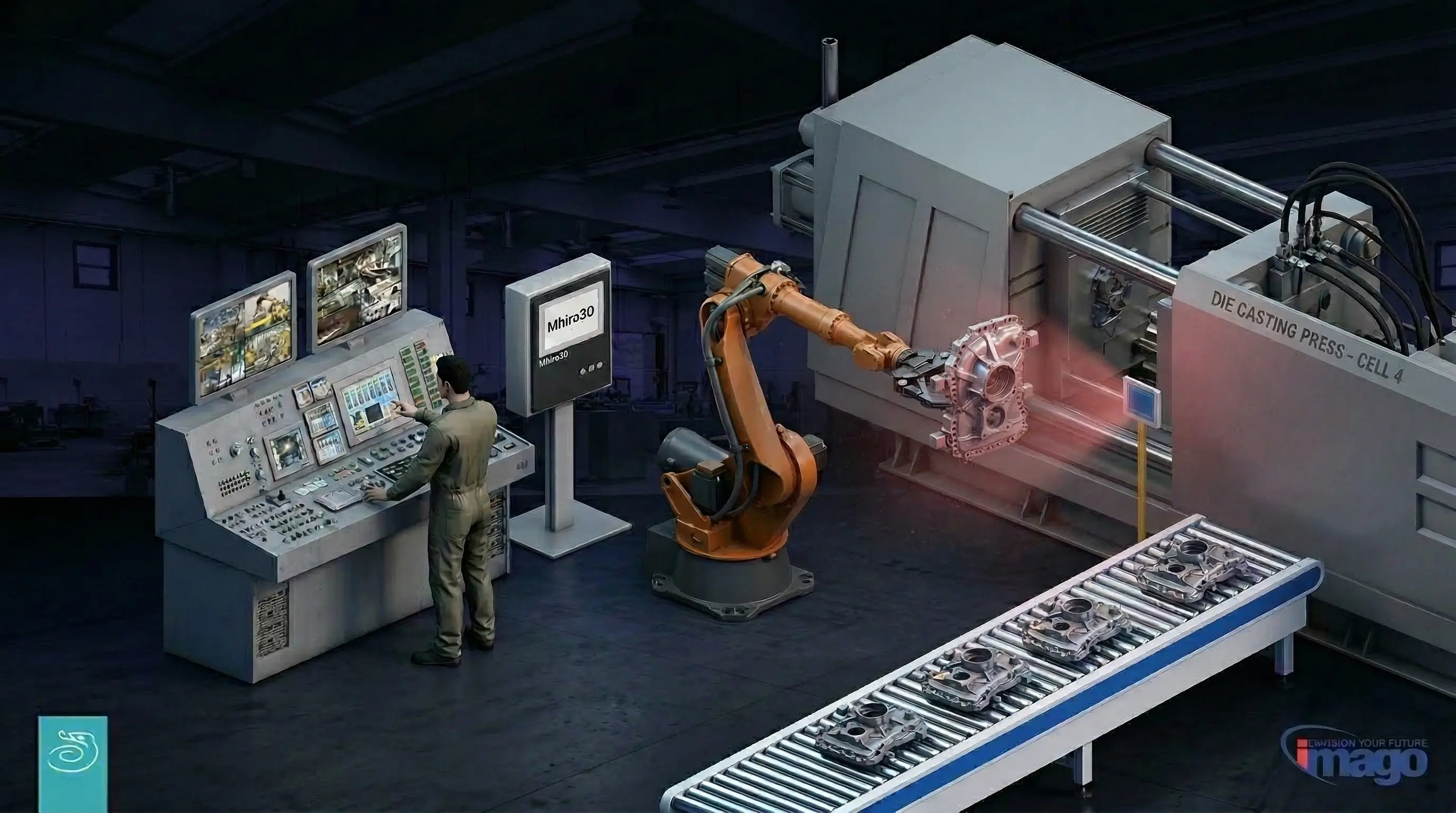
Mhira3D performs the casting inspection of the part just extracted from the press. The part, still in the robot gripper, is analysed by an advanced vision system that performs a 3D inspection of the casting and a check of its thermal map.
The limitations of traditional proximity sensors and photocells are overcome by the Mhira3D system thanks to its flexible creation and configuration management for each recipe, with no limit on the number of inspection points and analysable poses.
Mhira3D can see everything: incomplete castings, structural defects, incomplete vents, broken cores, thermoregulation anomalies and lubrication issues.
Cycle after cycle Mhira3D stores important process data, acting as an advanced sensor to support and assist the foundry operator.
Any casting can be inspected
No limits on material or constraints on cell integration. No limits on part size: it works equally well for small castings and Giga castings. Mhira3D adapts to the production line, not the other way around.
One part. Two visions.
Geometry and thermal map, captured at the same instant.
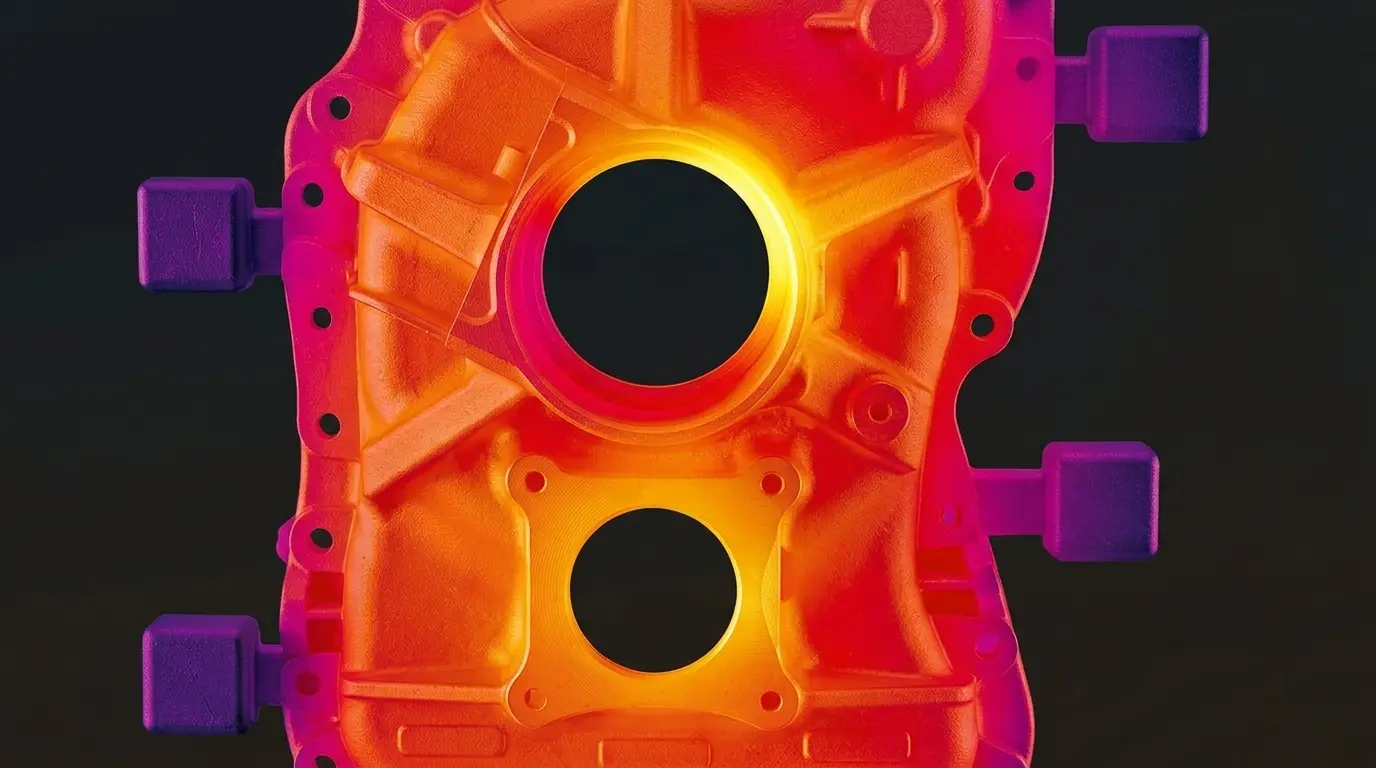
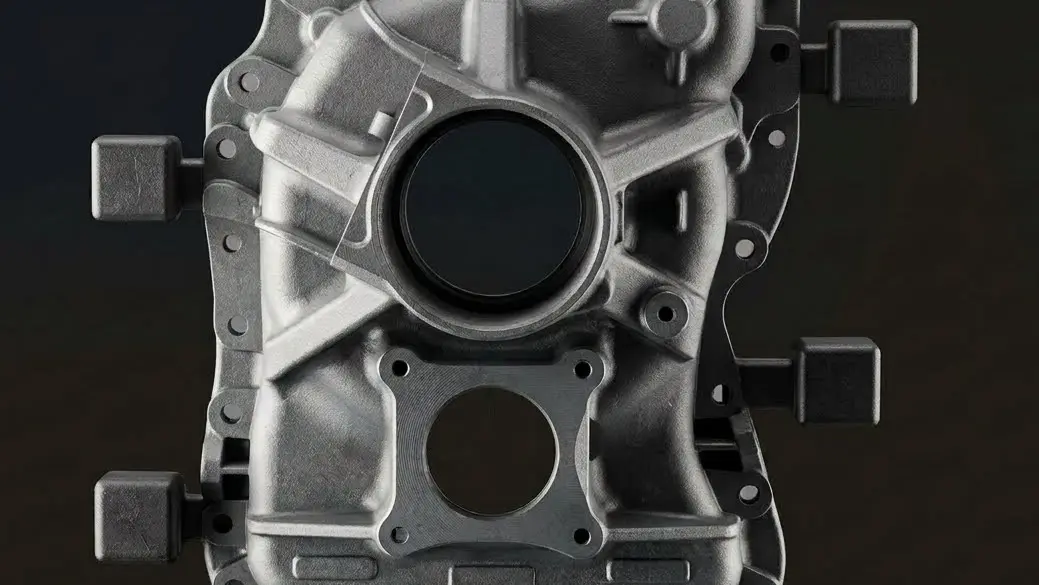
It sees the defect. It reads the process.
Imago Vision algorithms have been developed and refined through more than 20 years of real applications in die casting foundries. No magic parameters: every model is trained on the specific data of each plant, for maximum precision.
Every die casting non-conformity, in a single pass
Casting integrity
3D analysis verifies the completeness and integrity of a part of any size. Setup is fast and straightforward. The visual feedback makes it immediately clear where rejects have occurred.
Broken core detection
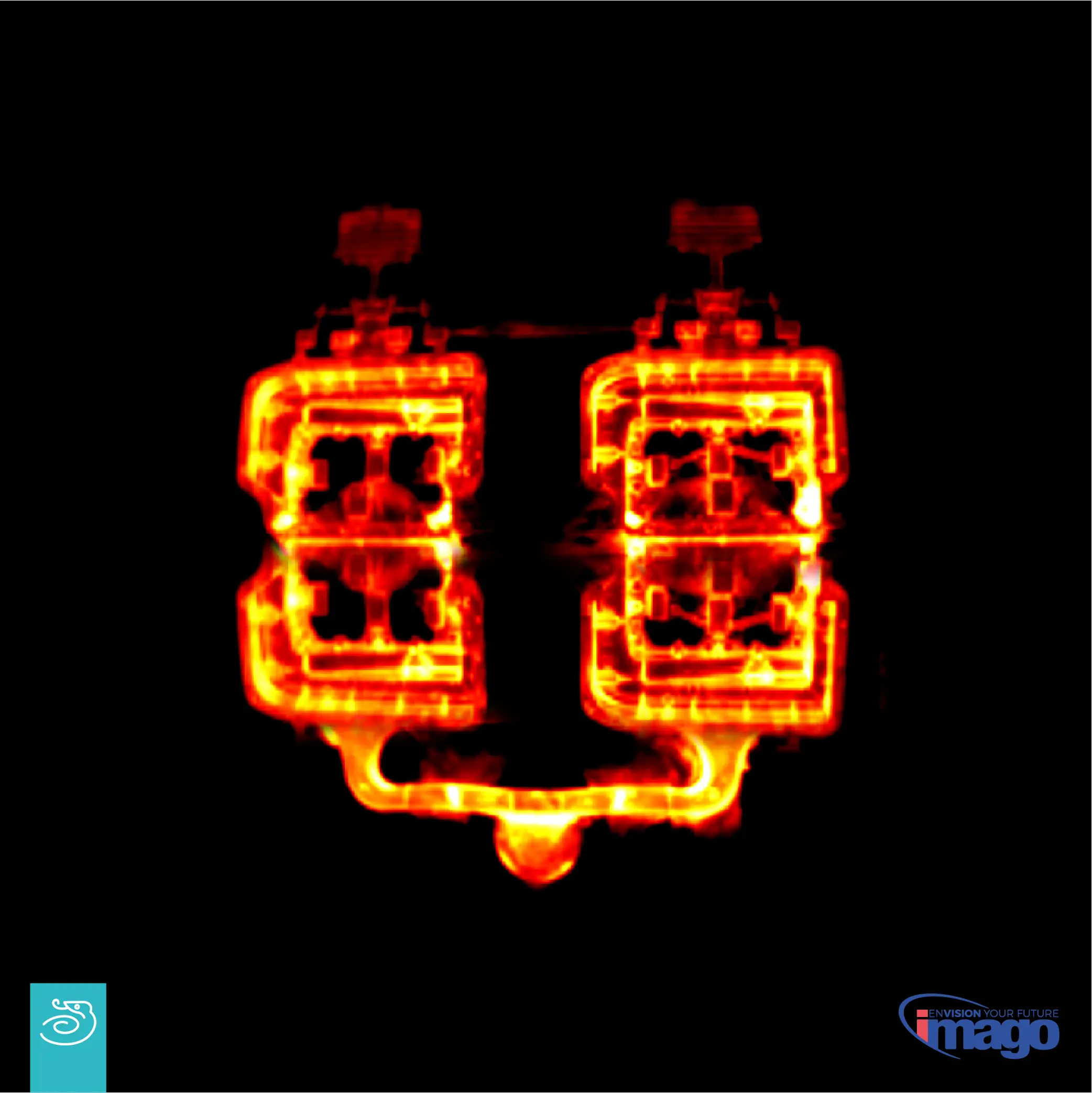
The thermal map clearly reveals broken cores in the mold. This event is recognized and reported during the cycle itself. Patented technology.
Incomplete vents
A missing or incomplete chill-vent indicates trapped gas and internal porosity. The multi-level reject configuration for inspection points provides the flexibility required by a continuously evolving process with multiple work stages.
Process stability & restart
Through automatic learning of thermal equilibrium, Mhira3D supports startup and restart phases and alerts when the process drifts from learned stability. Reduces waste and enables continuous monitoring of thermal equilibrium.
Injection track anomalies
The injection track is a fundamental diagnostic indicator of the process and can be inspected regardless of its position on the part.
Thermoregulation & lubrication issues
Clogged thermoregulation channels and lubrication nozzles are examples of faults the system can detect. Any process malfunction affects the casting: Mhira3D is able to identify and report them.
- Casting integrity: geometric completeness and integrity verification of the die-cast part via 3D analysis
- Broken cores: detection via characteristic thermal anomalies in the thermographic map (patented technology)
- Incomplete vents (chill-vent): measurement of the completeness of each vent channel
- Geometric deformations: verification that the part has not deformed during cooling
- Injection tracks: presence and conformity check with sub-millimetre accuracy
- Multi-cavity moulds: verification that each cavity has produced a complete and conforming part
- Process stability and restart: continuous monitoring of thermal equilibrium during startup and mould changeover phases
- Thermoregulation and lubrication malfunctions: detection of channel blockages and lubrication nozzle anomalies
Built for the foundry.
Robust hardware
Certified industrial hardware, designed to withstand the heat, fumes and harsh conditions of the foundry environment. System positioning is planned together with Imago's technicians to minimise routine maintenance. The software interface is intuitive and designed for production floor use.
Instant recipe changeover
Each recipe is configured independently in terms of number of poses and inspection points. Initial creation and configuration takes at most 5 minutes. Once created, the recipe is stored and can be recalled instantly — from the interface or via an external signal.
Quality control before and after.
A concrete view of what changes in the foundry when every casting is automatically inspected, directly in the robot cell.
| Aspect | Without Mhira3D | With Mhira3D |
|---|---|---|
| Defect detectionGeometric integrity of the die-cast part | Manually positioned sensors, limited to a single side of the part |
Offline configuration. No limit on the number of inspection areas and part sides analysable. |
| Mold core inspectionBroken or missing extraction cores | No inspection or very difficult/costly |
Automatic, in-line inspection without increasing cycle time. All areas can be inspected. |
| Thermoregulation monitoringStatus of the mold cooling circuit | Not detectable in real time |
Real-time monitoring |
| TraceabilityData archiving for every part produced | None |
Automatic: 3D images, thermal images and analysis data combined with the injection and part ID. |
| Startup and restartProcess stability after mold change or stoppage | Empirical, based on operator experience |
Automatic monitoring of process stability |
| Mold lubrication anomaliesIssues with the lubrication and cooling system | Not detectable automatically |
Anomalies detected thermally, in cycle |
| Format changeover timeTime to switch from one mold to another | Very long and requires entering the cell |
Instant and automatable |
| Format configurationInitial recipe setup for a new mold | Very long and requires entering the cell |
Less than 5 minutes |
A complete, turnkey system
Mhira3D arrives at the foundry ready to work: vision head, support structure and electrical cabinet. No additional components to purchase.
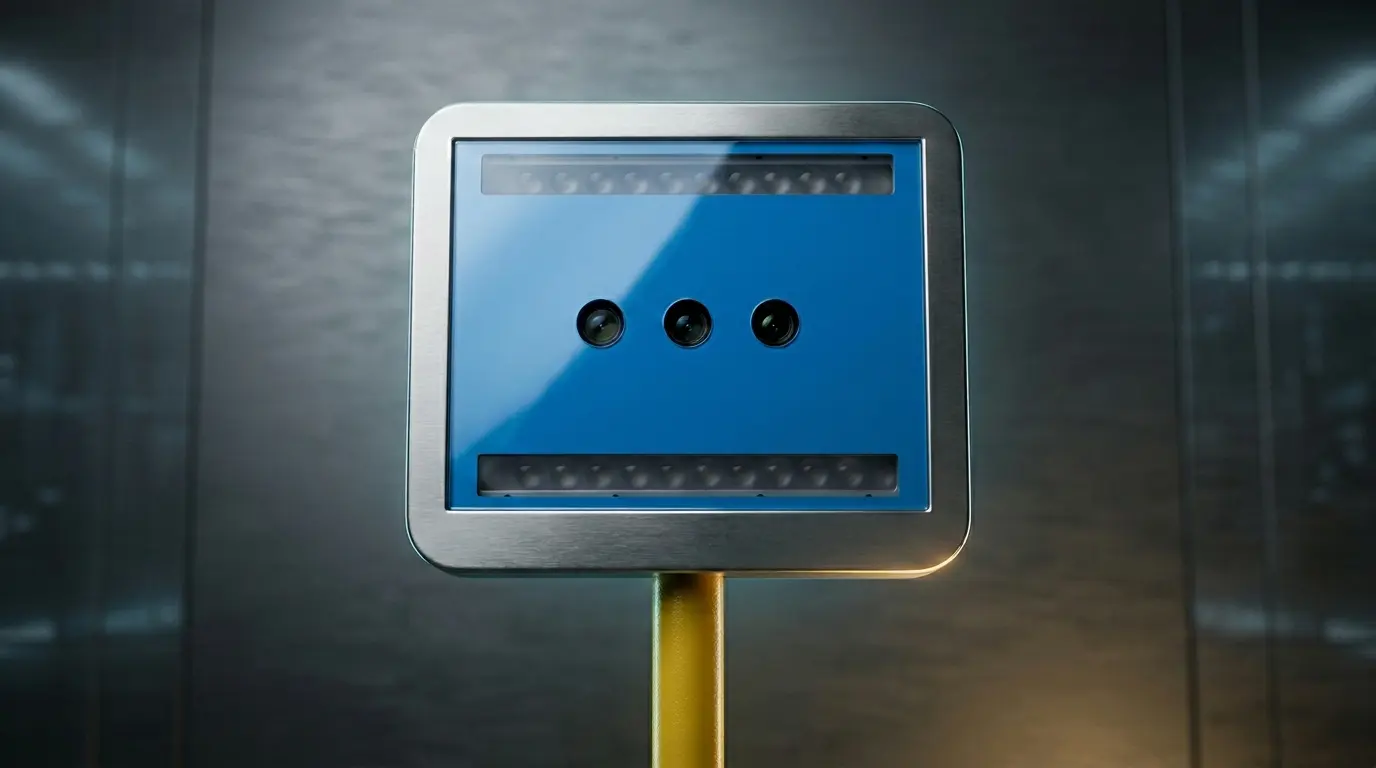
Vision head
3D cameras and thermal camera integrated in a single compact block, designed to withstand the temperatures, dust and vibrations typical of the foundry.
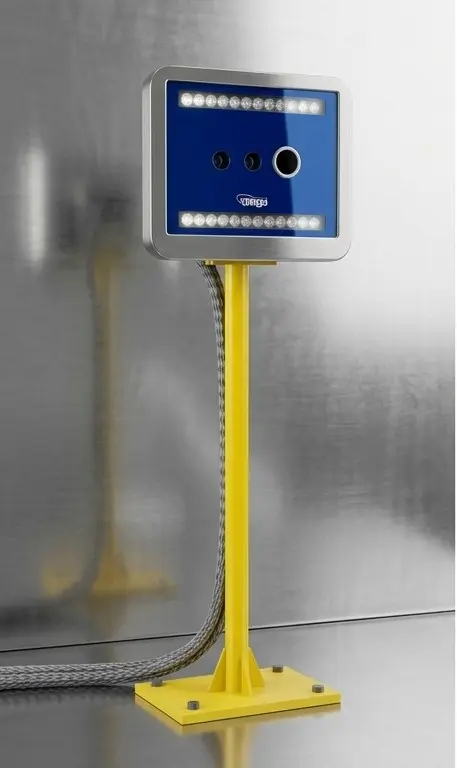
Support structure
Floor-mounted steel pole, positioned outside the robot's working area. Designed with Imago technicians for each specific cell.
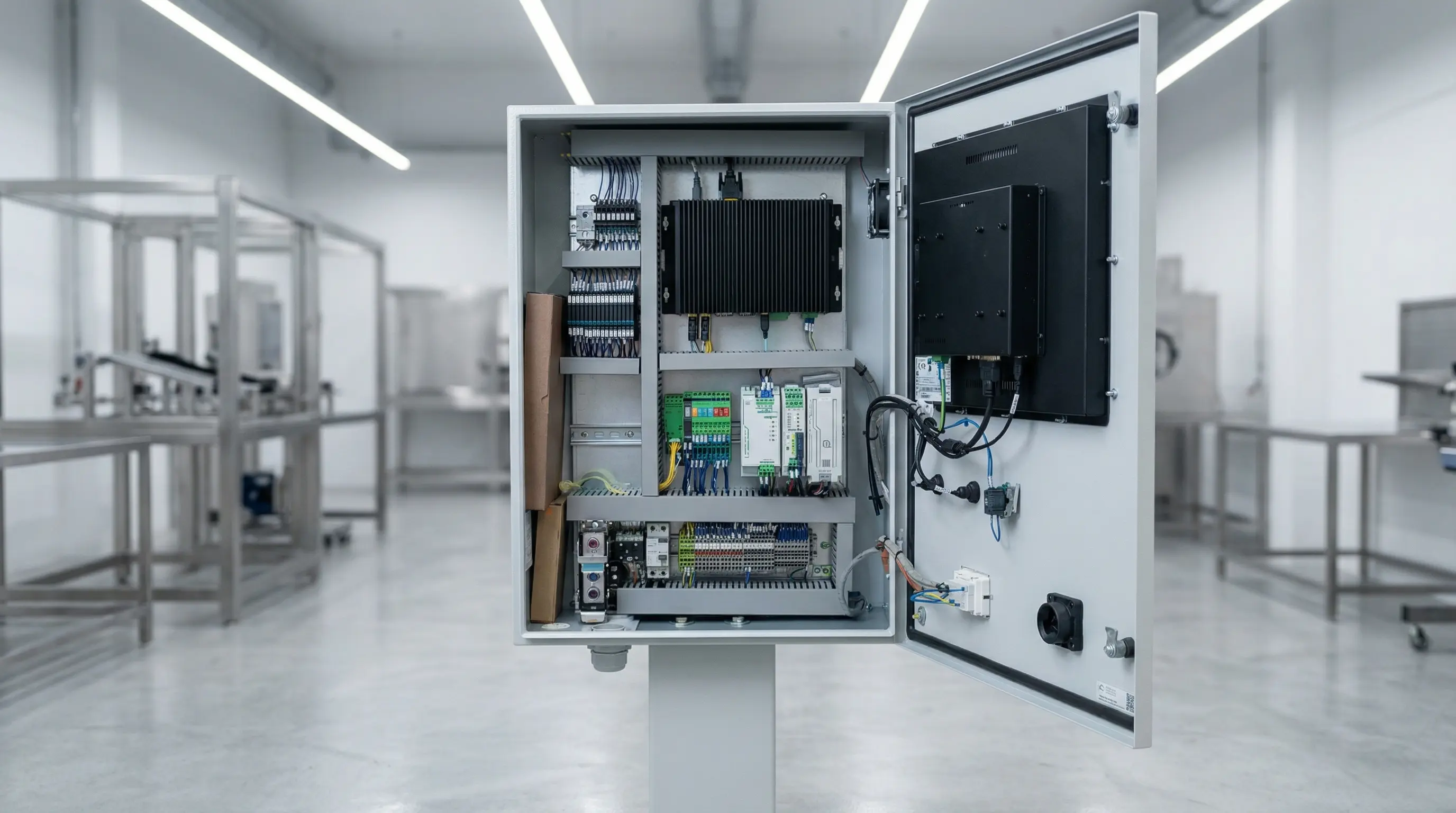
Electrical cabinet
Industrial PC, power supply and connections in a dedicated enclosure. Software interface accessible via touch monitor or remotely over local network.
Seeing is believing
Videos and images of the system in real production.

Chosen by those who accept no compromise
From tier 1 automotive manufacturers to European die casting leaders.
Italian expertise
in industrial vision
Imago Vision is an Italian company specialized in the development of advanced industrial vision systems. For more than 15 years it has created cutting-edge solutions for automated quality control, combining traditional machine vision and artificial intelligence.
Mhira3D is the result of years of applied research carried out directly in foundries, side by side with customers. Not a lab prototype, but a solution born from a deep understanding of real die-casting processes and their critical issues.
Questions about Mhira3D?
Yes. The system is optimised for the foundry environment and is flexible enough to adapt to any type of casting regardless of the material it is made from.
Yes. Mhira3D is designed to inspect parts of any size, including castings produced with Giga casting presses and multi-cavity molds. The system adapts to the part volume and mold geometry, ensuring complete coverage of all cavities and all areas of interest, without compromising cycle times.
Yes. Mhira3D is compatible with any robot brand used in die casting and can communicate with both Siemens and Allen Bradley PLCs. Integration is via standard protocols (digital I/O, Ethernet/IP, Profinet and others).
Installation typically takes 1–2 days. Imago's technicians support the entire on-site commissioning process.
No. Mhira3D can be installed on both new and pre-existing cells and does not require additional panels or covers. The only important note is that the mounting structure must not be in contact with highly vibrating surfaces — ideally it should be fixed to the floor.
Each recipe is configured independently in terms of number of poses and inspection points. Initial creation and configuration takes at most 5 minutes. Once created, the recipe is stored and can be recalled very quickly — from the interface or via an external signal.
Mhira3D detects broken cores in the mold, integrity and incompleteness issues, thermoregulation anomalies and lubrication system problems. It also supports startup and restart phases by monitoring process stability.
The system is designed to be robust to foundry working conditions. Positioning is planned together with Imago's technicians to minimise routine maintenance. We recommend checking monthly whether the panel needs cleaning with a cloth and alcohol.
Imago places great importance on customer support. A training course is included during installation and can be repeated later. We have a Service department available during Italian working hours, plus dedicated support packages to meet various needs. We operate with two partner companies worldwide — one in the United States and one in the Czech Republic.
Every measurement is automatically stored with a timestamp, part ID, 3D and thermal images, and the result for each inspection point. Data can be viewed in dedicated screens directly in the software interface, or exported in standard formats (PDF, CSV). It is also accessible externally for MES integration, and a PowerBI service is available for remote data consultation.
No. Mhira3D operates in fully offline mode, within the plant's local network. An internet connection is not required for daily operations.
Continuous quality control.
From casting to finished part.
Mhira3D doesn't work alone. It is part of an integrated suite that monitors every critical phase of die casting, generating an uninterrupted quality chain.
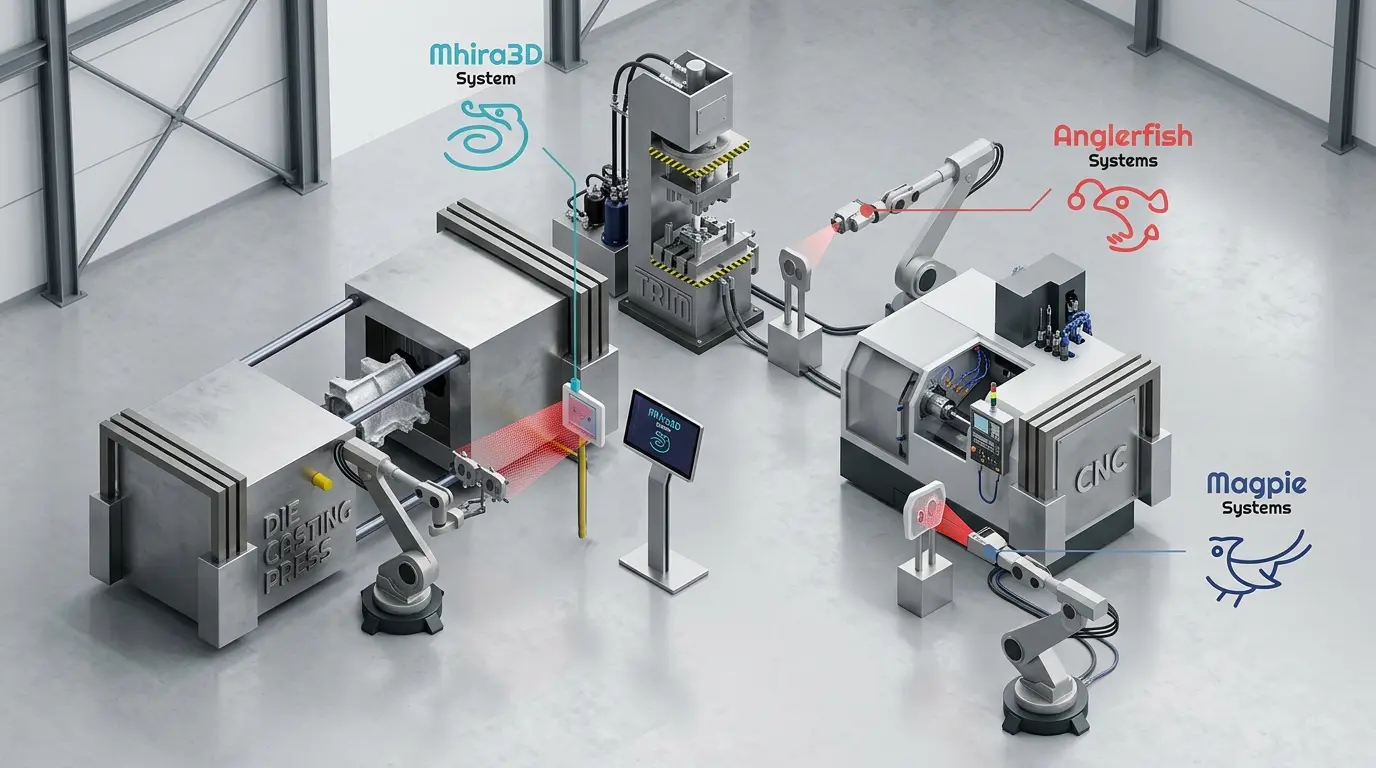
Inspection of the casting just extracted from the press. Broken cores, thermoregulation anomalies, lubrication issues, process stability. Analysis in less than a second, directly in the cell.
360° 3D inspection after deflashing. Complete dimensional verification, hole occlusions, flatness, integrity of the trimmed profile.
Final inspection for emerging porosity, machining burrs and surface finish quality before shipment.
defects?
Find out how Mhira3D can transform quality control in your die-casting plant. Every installation is tailored to the specific needs of your production.
Or write to info@imagovision.it or visit imagovision.it